Fair Mobility dialogues
Welcome to the Fair Mobility Podcast and webinar series…
A collection of voices, stories, and reflections from across Europe, all centered on one key question: how can we create more inclusive, accessible, and equitable mobility systems?
Each podcast, produced by a project partner, dives into local realities: from everyday barriers faced by women and gender minorities, to broader issues like rural isolation, safety, social inequality, and the environmental impact of car dependency. You’ll hear personal experiences, expert insights, and community-driven ideas for building fairer ways of moving through and existing in space.
Explore the podcasts and webinars below to obtain unique perspectives on how mobility connects to our daily lives, our rights, and our sense of belonging.
Webinars
Planning for Everyone? Rethinking Mobility Inclusion with Lina Mosshammer (POINT&)
When planning transport infrastructure and services, designers and providers often fall back on traditional models focused on simple A2B trips. These models frequently overlook the complex reality and varied needs of different target groups, leading to persistent inequalities in mobility access and experiences between men, women, and minoritised groups. Welcome to the third webinar for the Fair Mobility project, part of the Driving Urban Transitions (DUT) Partnership. This session features Lina Mosshammer, CEO and co-founder of POINT&. Drawing on over ten years of experience in research, policy, and innovation, including her work at the World Bank and as co-founder of Women in Mobility, Lina Mosshammer is dedicated to developing innovative, user-centered solutions for truly inclusive mobility.
In this insightful discussion, Lina Mosshammer addresses how we can move past the notion of “planning for everyone” to focus on specific user needs. We dive into crucial topics that resonate with the Fair Mobility mission to improve mobility frameworks for women and gender minorities in small towns and rural-urban areas.
The POINT& website
Cooperative Urbanism: Building Inclusive Cities Together (Divercity)
How can cities become more inclusive, accessible, and caring? The DiverCity project believes the answer lies in listening to—and working alongside—those whose voices are too often left out of urban decision-making.
Join us for an inspiring session with Estel Cooperative, a Spain-based team of architects and urban planners pioneering cooperative urbanism. Their work spans urban strategies, public space design, cooperative processes, and urban pedagogy—always in close collaboration with communities. As part of the Erasmus+ program, DiverCity brought together partners from Spain (ESTEL), Greece (URBANA), Belgium (Urban Foxes), and Germany (CGE e.V) to center the perspectives of young people—especially young women and those from marginalized backgrounds—in shaping the cities of tomorrow. Through participatory action research, training, and creative workshopsthe project engaged over 400 participants across four countries.
Moderator: Bahanur Nasya (Fair Mobility Project)
Guest: Konstantina Chrysostomou (Estel Cooperative)
Explore the DiverCity Guidebook
Visit the Estel Cooperative website
On demand transport and care work in rural areas (Mobiflex)
Franziska Ammer talks about her work on on-demand mobility and care work in rural areas in the context of the MobiFlex research project. She is employed by mobyome, an agency specializing in sustainable mobility in paticular on-demand services. Women* who perform disproportionately more unpaid care work than men cover complex trip chains in their everyday lives which are not adequately covered by public transport services – a fact that has not yet been sufficiently considered in previous planning practises. Based on a literature and document analysis as well as semi-structured expert interviews, this study identifies the central requirements for participatory processes in the context of care work and mobility in rural areas and develops a concrete participation concept for planning of on-demand transport. This takes into account the specific needs of carers and the people they care for (people with limited physical mobility, senior citizens, children and teenager).
Grounded in the theoretical framework of gender mainstreaming, gender smart mobility and mobilities of care, the analysis shows that flexible and easily accessible services combined with a low-threshold and binding participation have the potential to increase the use of on-demand transport.
Podcasts
How to rebuild the city? Solutions, initiatives, and concrete steps towards change
This is part of a three-episode series exploring accessibility and inclusive mobility challenges in Bucharest, featuring local experts and initiatives that highlight both obstacles and solutions.
Episode 3 – How to rebuild the city: Solutions, initiatives, and concrete steps towards change In the last episode, together with Iris Popescu from AMAIS, we discuss the design mistakes that prevent people from easily accessing public spaces and institutions. We talk about the empathy workshops organized by AMAIS and what they highlight in terms of real accessibility gaps in the city. Together with Iris, we discover low-cost solutions that can be implemented in about a year, discuss the training of professionals, the use of data and impact analyses, present examples from other countries, and the differences in treatment between types of disabilities. The episode outlines concrete steps towards a more inclusive Bucharest.
Speakers: Andrada Lupulescu – Urbasofia Srl (Project Fair Mobility); Iris Popescu – AMAIS
The podcast is in Romanian.
Public space for all: What is missing from Bucharest's infrastructure?
This is part of a three-episode series exploring accessibility and inclusive mobility challenges in Bucharest, featuring local experts and initiatives that highlight both obstacles and solutions.
Episode 2 – Public space for all: What is missing from Bucharest’s infrastructure In the second episode, together with Marina Corneliu from Străzi pentru Oameni (Streets for People), we discuss where people feel most excluded: on sidewalks, at crosswalks, or at public transport stations. We also discuss what temporary projects and urban design workshops show us and how they can be transformed into permanent changes. Marina goes on to explain how institutions can be held accountable through data and audits and what role citizens can play in this process. A key element of the episode is communication, more specifically how we can present accessibility in a clear and empathetic way to the general public.
Speakers: Andrada Lupulescu – Urbasofia Srl (Project Fair Mobility) Marina Corneliu – Străzi pentru Oameni (Streets for People)
The podcast is in Romanian.
The city that rejects you: Why accessibility is still a systemic problem?
This is part of a three-episode series exploring accessibility and inclusive mobility challenges in Bucharest, featuring local experts and initiatives that highlight both obstacles and solutions.
Episode 1. A conversation with Mihai Iacovici from ADIZMB about the difficulties faced by vulnerable groups (reduced mobility or other special needs) when traveling in the Bucharest–Ilfov region. The episode addresses questions such as “Which investments have the greatest impact at the lowest cost?”, “How do local authorities apply design rules?” and “How is progress in inclusive mobility actually measured?”. It also touches on European, national, and local funding and the barriers that arise. This video was produced by our Romanian partner Urbasofia within the framework of the Fair Mobility project.
Speakers:
Andrada Lupulescu – Urbasofia Srl (Project Fair Mobility) Mihai Iacovici – ADIZMB
The podcast is in Romanian.
FairMobility in Ebensee - Safe mobility for all.

In this episode of the Fair Mobility Podcast, the Frauen*Forum Salzkammergut addresses the question of how mobility can be made safer and more accessible, particularly for disadvantaged groups. After all, mobility determines how much people can participate in public life.
Through conversations with Ebensee residents, we gain insight into their everyday mobility and the obstacles they encounter. We also collect ideas on how to improve mobility in the future.
The podcast is in German.
15-Minute City
In this episode, the founder of the 15-minute-city accepted our challenge. 10 questions in 10 minutes. Our questions outline various aspects of the 15-minute-city concept. We ask whether the concept can also be used in rural areas, what role fair mobility and gender aspects plays in this, what best practice examples exist, and which city Carlos prefers. We also confront him with the concerns and criticism that have arisen in the media regarding his concept and dispel any misunderstandings.
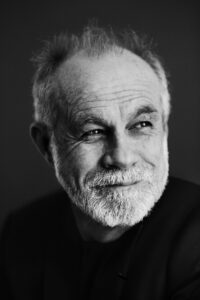
Women changing cities
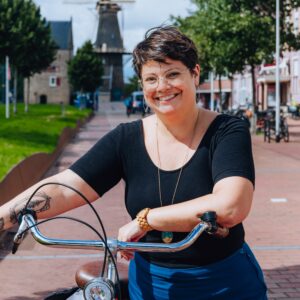
In this episode we interview Author and Activist Melissa Bruntlett. We ask questions about her international experiences with mobility in Europe, USA and Australia. We focus on her professional experiences with the social acceptance of sustainable mobility and why women play a special role in the context of redesigning mobility. Bruntlett relays exciting stories about women who have found strategies to overcome mobility problems outside Europe.
Youth and Mobility

In this episode, we interview Sana’a Khasawneh, Senior Advocacy and Public Affairs Manager at YOURS (Youth for Road Safety).
Sanaa stands out as a remarkable young voice on transport. We spoke with her in detail regarding her perspectives and experiences on safety, mobility and mental health.